

Andrew Huberman’s Supplement Recommendations for Performance and Well-being
May 8, 2026
Dietary Supplements for Depression and Mental Well-being
May 9, 2026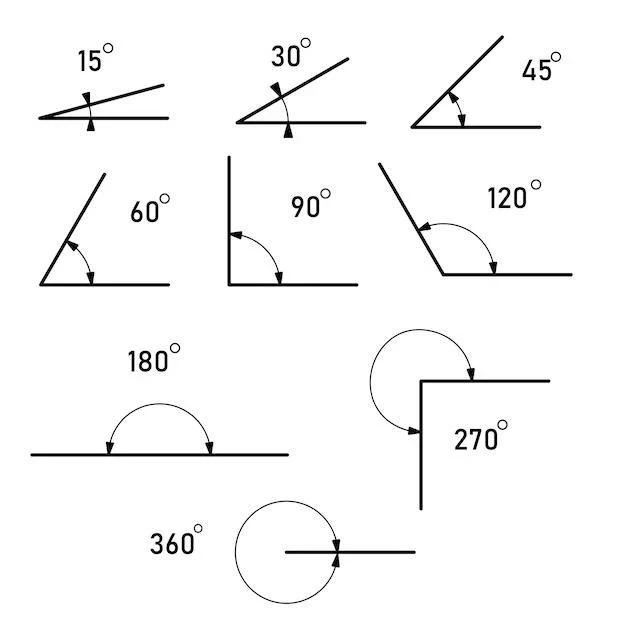
In the vast and intricate world of geometry, angles form the fundamental building blocks for shapes, structures, and spatial relationships. Among the many classifications of angles, supplementary angles hold a crucial position, defined by a simple yet powerful rule: two angles are supplementary if their sum equals precisely 180 degrees. This article delves into the concept of supplementary angles, paying particular attention to the unique and significant scenario where one of these angles measures exactly 90 degrees.
What Are Supplementary Angles?
At its core, the definition of supplementary angles is straightforward. When two angles, let’s call them Angle A and Angle B, combine to form a straight line, their sum is 180 degrees. This means A + B = 180°. Visually, imagine a straight line. If you pick a point on that line and draw a ray emanating from it, you’ve just divided the 180-degree angle of the straight line into two supplementary angles; For example, an angle of 60 degrees has a supplement of 120 degrees (60 + 120 = 180); Similarly, an angle of 150 degrees has a supplement of 30 degrees (150 + 30 = 180). Understanding this relationship is vital for solving numerous geometric problems, from calculating unknown angles in various polygons to analyzing the properties of parallel lines when they are intersected by a transversal.
The Unique Case: Supplementing 90 Degrees
Now, let’s address the specific theme, which is ‘supplement 90 degrees’. This refers to the situation where one of the supplementary angles is a right angle, meaning it measures exactly 90 degrees. If Angle A = 90°, then to find its supplement, Angle B, we apply the rule:
Angle A + Angle B = 180°
90° + Angle B = 180°
Angle B = 180° ⎼ 90°
Angle B = 90°
The conclusion is clear: the supplement of a 90-degree angle is always another 90-degree angle. This outcome is highly significant, as it means two right angles perfectly combine to form a singular straight line. This scenario is intrinsically linked to the concept of perpendicular lines. When two lines intersect and form four right angles, any two adjacent angles are supplementary, and in this specific case, they are both 90 degrees. This fundamental relationship is observable everywhere, from the perpendicular axes of a Cartesian coordinate system to the precise corners where walls meet in a room.
Applications and Real-World Examples
The principle of supplementary angles, especially the 90-degree case, is not confined to textbooks. Its applications are widespread:
- Architecture and Construction: Builders and architects rely heavily on right angles. When constructing walls, floors, or roofs, ensuring that corners are perfectly 90 degrees is critical for structural integrity and aesthetic appeal. The supplementary nature of adjacent 90-degree angles ensures that a smooth, straight edge is maintained.
- Engineering: From designing bridges to manufacturing precise components, engineers use perpendicular alignments. The mathematical certainty that a 90-degree angle’s supplement is also 90 degrees simplifies complex calculations and design verification, ensuring robust and functional creations.
- Navigation: While primary bearings (North, East, South, West) are often 90 degrees apart, understanding supplementary angles helps in plotting courses and understanding relative directions.
- Art and Design: Many visual compositions utilize grids and perpendicular lines to create balance and structure. The inherent harmony of supplementary 90-degree angles contributes to visual order and clarity.
Distinction from Complementary Angles
It’s important to briefly distinguish supplementary angles from complementary angles to avoid confusion; While supplementary angles sum to 180 degrees, complementary angles are two angles whose sum is 90 degrees. For example, a 30-degree angle’s complement is 60 degrees (30 + 60 = 90). The concepts are related by the use of angles, but their defining sums are distinctly different.
Key Takeaways
- Supplementary angles are pairs of angles that add up to 180 degrees.
- The unique supplement of a 90-degree angle is always another 90-degree angle.
- This specific relationship is fundamental to understanding perpendicular lines and right angles.
- It has extensive practical applications in various fields, from construction to design.