
Dietary Supplements Types Benefits and Responsible Use
January 1, 2026
Understanding Supplements in Crossword Puzzles
January 1, 2026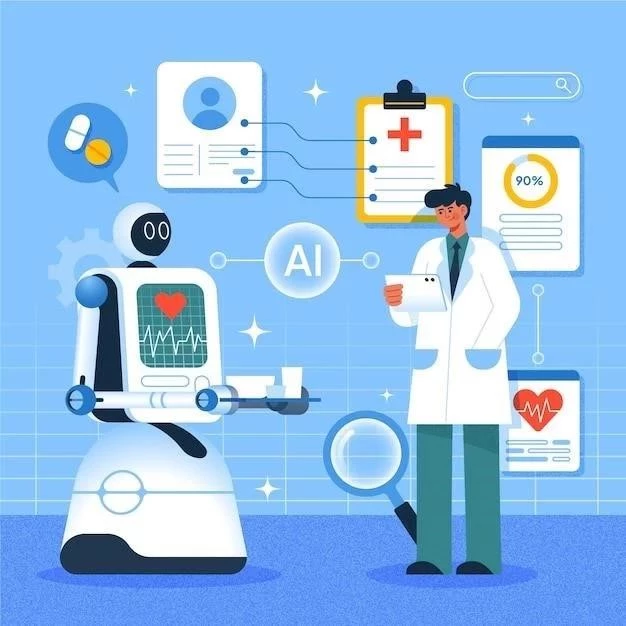
The future of Artificial Intelligence in healthcare heralds a new era of medical advancement. This powerful technology will profoundly enhance every facet of the industry, from diagnosis to treatment and patient management. It is poised to become an indispensable tool, working alongside human expertise to elevate care standards and forge innovative solutions for complex health challenges worldwide, improving outcomes.
Current Applications and Impact
Artificial Intelligence is profoundly integrated into modern healthcare, demonstrating significant impact. In diagnostics, AI algorithms analyze vast medical imagery—X-rays, MRIs, pathology slides—with speed and accuracy. This aids radiologists and pathologists in identifying subtle anomalies, leading to earlier, more precise disease detection (e.g., cancer, neurological disorders), revolutionizing workflows, improving patient prognoses. AI is also invaluable in drug discovery and development. Machine learning models efficiently sift through extensive chemical compound databases, predicting drug candidates and understanding protein interactions. This accelerates bringing new medications to market, offering novel treatments. AI optimizes clinical trial design, predicts patient responses, making research more efficient and targeted, fostering faster innovation, enhancing the pipeline.
Beyond these, AI plays a crucial role in personalized medicine. Analyzing individual patient data—genetic information, medical history, real-time physiological data from wearables—AI recommends tailored treatment plans. This optimizes therapies for unique biological makeup, maximizing effectiveness, minimizing side effects. AI tools predict disease progression, identify high-risk patients for proactive care. Concurrently, AI enhances operational efficiency and administrative tasks. Intelligent automation streamlines appointment scheduling, medical coding, and resource allocation, freeing professionals for direct patient care. Predictive analytics aids patient flow, forecasts disease outbreaks, reducing administrative burdens and operational costs. Lastly, AI boosts patient engagement and remote monitoring via virtual health assistants and integrated wearable devices. These continuously track vital signs, alerting providers to potential issues, facilitating proactive care and extending healthcare access. Its impact: improved patient outcomes, reduced costs, and a more personalized, efficient global healthcare experience, underscoring AI’s transformative power.
Challenges and Ethical Considerations
The integration of AI in healthcare, while promising, faces significant challenges and complex ethical considerations. Foremost is data privacy and security. AI systems demand access to vast sensitive patient information, raising critical questions about safeguarding this data from breaches and misuse. Robust cybersecurity and strict adherence to privacy regulations like HIPAA and GDPR are paramount to maintaining patient trust and protecting individual rights. Additionally, addressing bias and fairness within AI algorithms is crucial. If training data reflects existing societal inequalities, AI can inadvertently perpetuate or amplify these biases, leading to discriminatory outcomes in diagnosis or treatment for certain patient populations. Developing equitable algorithms and diverse datasets is essential to prevent exacerbating health disparities and ensure fair, impartial treatment for all.
Another profound challenge involves accountability and liability. When an AI system errs, causing patient harm, determining responsibility—developer, clinician, or hospital—is not straightforward. Clear legal and ethical frameworks for accountability are urgently needed to foster responsible innovation. Furthermore, the “black box” problem, where advanced AI models lack transparent decision-making, hinders clinical acceptance. Healthcare professionals need to understand AI rationale, necessitating explainable AI (XAI) to foster trust and confidence. The rapid evolution of AI also outpaces existing regulatory frameworks. Establishing comprehensive guidelines for validation, deployment, and monitoring of AI in clinical settings is essential for safety, efficacy, and ethical application. Concerns also exist about potential job displacement and the risk of over-reliance, leading to human deskilling.
Emerging Trends and Future Potential
The future of AI in healthcare is defined by crucial emerging trends and immense potential. Expect radical shifts transforming medical practice, boosting capabilities. This evolution will truly redefine health management and patient care, improving outcomes. AI’s integration will forge an innovative, responsive healthcare system, shaping global medicine.
AI’s Role in Personalized Medicine and Diagnostics
AI’s transformative impact on personalized medicine and diagnostics is profound. In personalized medicine, AI algorithms analyze vast datasets, including an individual’s genomic profile, proteomic data, lifestyle factors, environmental exposures, and electronic health records. This comprehensive analysis allows for the development of highly tailored treatment plans, optimizing drug dosages, predicting adverse reactions, and recommending specific therapeutic interventions that are most effective for a patient’s unique biological makeup. For instance, AI can identify genetic markers that indicate a patient’s likely response to a particular chemotherapy drug, thereby guiding oncologists toward the most efficacious treatment path and avoiding ineffective or harmful options. This move away from a one-size-fits-all approach is truly revolutionary, making medical care far more precise and patient-centric.
Regarding diagnostics, AI significantly enhances the accuracy and speed of disease detection. Machine learning models excel at interpreting complex medical images, such as X-rays, MRIs, CT scans, and pathology slides, often identifying subtle anomalies that might be missed by the human eye. This capability is crucial for early detection of diseases like cancer, diabetic retinopathy, or neurological disorders, where timely intervention dramatically improves prognosis. Furthermore, AI can process laboratory results and patient symptoms to predict disease onset even before clinical manifestations appear, offering unprecedented opportunities for preventative care. Wearable devices, continuously collecting physiological data, feed into AI systems to monitor health in real-time, flagging potential issues and enabling proactive management. AI serves as a powerful diagnostic supplement, augmenting the capabilities of medical professionals by providing a deeper, data-driven understanding of a patient’s health status. It can also identify optimal nutritional supplements or lifestyle adjustments based on individual metabolic profiles, further solidifying its role in truly personalized health management. The integration of AI in these areas promises a future where healthcare is not only reactive but highly predictive and preventative, truly revolutionizing how we approach individual well-being and disease management globally.